
In 2011, 315 apartments were proposed at 3233 Deer Hill Road.
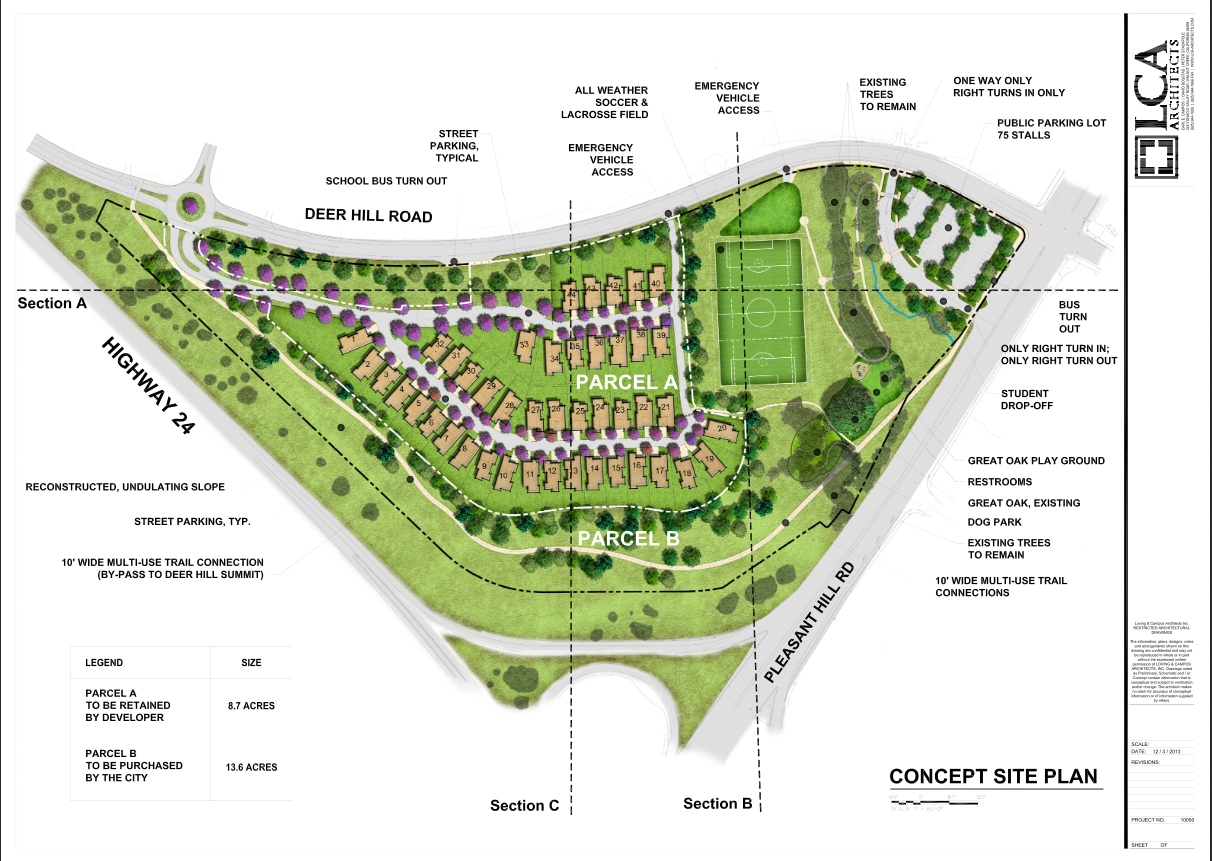
Given the public’s dissatisfaction with the application… Given that the Circulation Commission and Design Review Commission have both indicated that they cannot support the project and have requested a significantly scaled-down alternative… Given that the Developer has indicated that, if the project is denied, it will file a lawsuit against the City… And given the risks to the City presented by that potential lawsuit, and particularly those associated with California’s Housing Accountability Act, which limits the ability of cities to deny an affordable housing development proposals unless that proposal is inconsistent with both the General Plan land use designation and zoning ordinance that existed at the time the application was deemed complete… About four weeks ago the City Council directed staff to participate in conversations with the developer to determine if there was an alternative plan that would be acceptable to all parties — the developer, community members, and the city. Before you tonight is an introduction of such an alternative:
September 12th, 2015
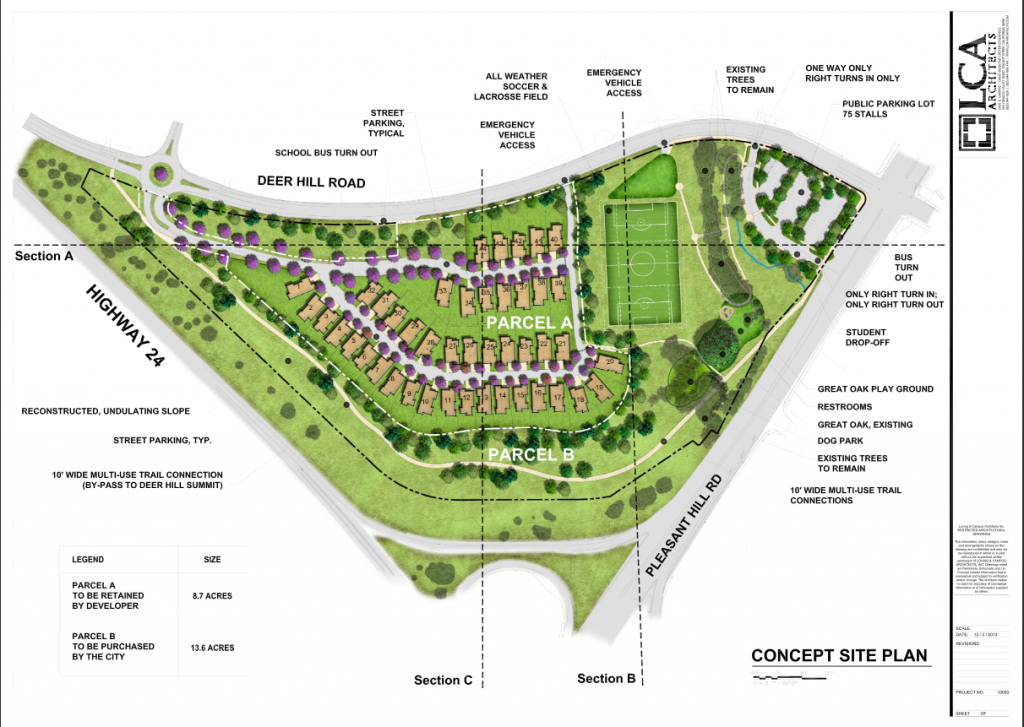
The City of Lafayette approved 44 Single Family Homes, costing at least $1.2 million each.
Section 65589.5(j) of the Housing Accountability Act states that when a proposed housing development complies with the applicable, objective general plan and zoning standards, but a local agency proposes to approve it only if the density is reduced, the agency must base its decision on written findings supported by substantial evidence that: 1. The development would have a specific adverse impact on public health or safety unless disapproved, or approved at a lower density; and 2. There is no feasible method to satisfactorily mitigate or avoid the specific adverse impact, other than the disapproval, or approval at a lower density. These two conditions were not met. Therefore, the City of Lafayette violated the Housing Accountability Act.
How it ended
The development proposed in Lafayette was a truly rare proposal: a dense, multifamily development proposed right next to a transit station in an affluent, low density suburb. It may be unsurprising that the city did nearly everything to try and stop it.
First, the city rejected the design of the zoning compliant, 315-unit project and recommended instead a project of 44 single family homes. Despite enacting zoning regulations allowing for high density, the city was attempting to impose single family zoning on the property through their discretionary design review process. CaRLA sued to force the city to follow its own zoning and approve the higher density option. Unfortunately, during litigation the developer looked for easy resolution and agreed with the city to move forward with the smaller development. While CaRLA contested this approach, the judge ruled our case could not move forward if the developer sought to move forward with a lower density option.
Fortunately, as a result of a botched attempt at a rezoning referandum, and through sustained advocacy and organizing from local groups like Inclusive Lafayette, the larger project was revived, brought back to Council, and finally approved in 2020.